So You Want to Sell Longboard Parts
I ride almost every day. (The rain here is real!) I think I know what works. I've got an education, feelings about risers and bushings that border on unreasonable, and a lifelong itch to explore what's possible. I started digging into the economics of actually making and selling longboard accessories. Not as a daydream, but as a real exercise in understanding whether it's possible.
This is me showing my work. If I eventually sell a LWBSK8 product, I want you to have seen the thinking that got me there. If the numbers don't work, I want you to see that, too.
The Market is Real, but it's Small
The total skateboard market sits somewhere around $3 billion globally. That sounds significant until you start pulling it apart. One market research firm estimates the US longboard segment at roughly $130 million. Market research reports on skateboarding seem to vary wildly in methodology and scope, and none of them are specifically tracking the longboard niche. The honest framing is this: Longboards are a fraction of the overall skateboard market, and the riders who obsess over individual components are a fraction of that fraction.
I wouldn't be selling to "skateboarders." I'd be selling to the subset of longboarders who care enough to upgrade individual components. That's a passionate audience, but not a large one.
There's another thing that's critical: The people most likely to buy a niche longboard product are also the people most capable of evaluating whether it's any good. You can't fake it in this market and survive.
Where the Money Goes
For a specialty hardgoods component—let's say a set of risers that retails for $5—the production cost might be $0.50 or less if you're injection-molding commodity plastic in bulk. That sounds like a goldmine until the supply chain takes its cut. A brand typically wholesales to shops at roughly 50% of retail, and if a distributor is involved, they want 15–25% off the wholesale price for the service of warehousing, selling, and shipping to shops on your behalf.
So on that $5 riser set: The shop buys it for maybe $2.50, the distributor bought it from you for around $1.90, and your production cost was $0.50. You made $1.40 per set, before shipping, packaging, and returns. Scaling that to higher-priced items, the absolute dollars improve, but the percentages hold.
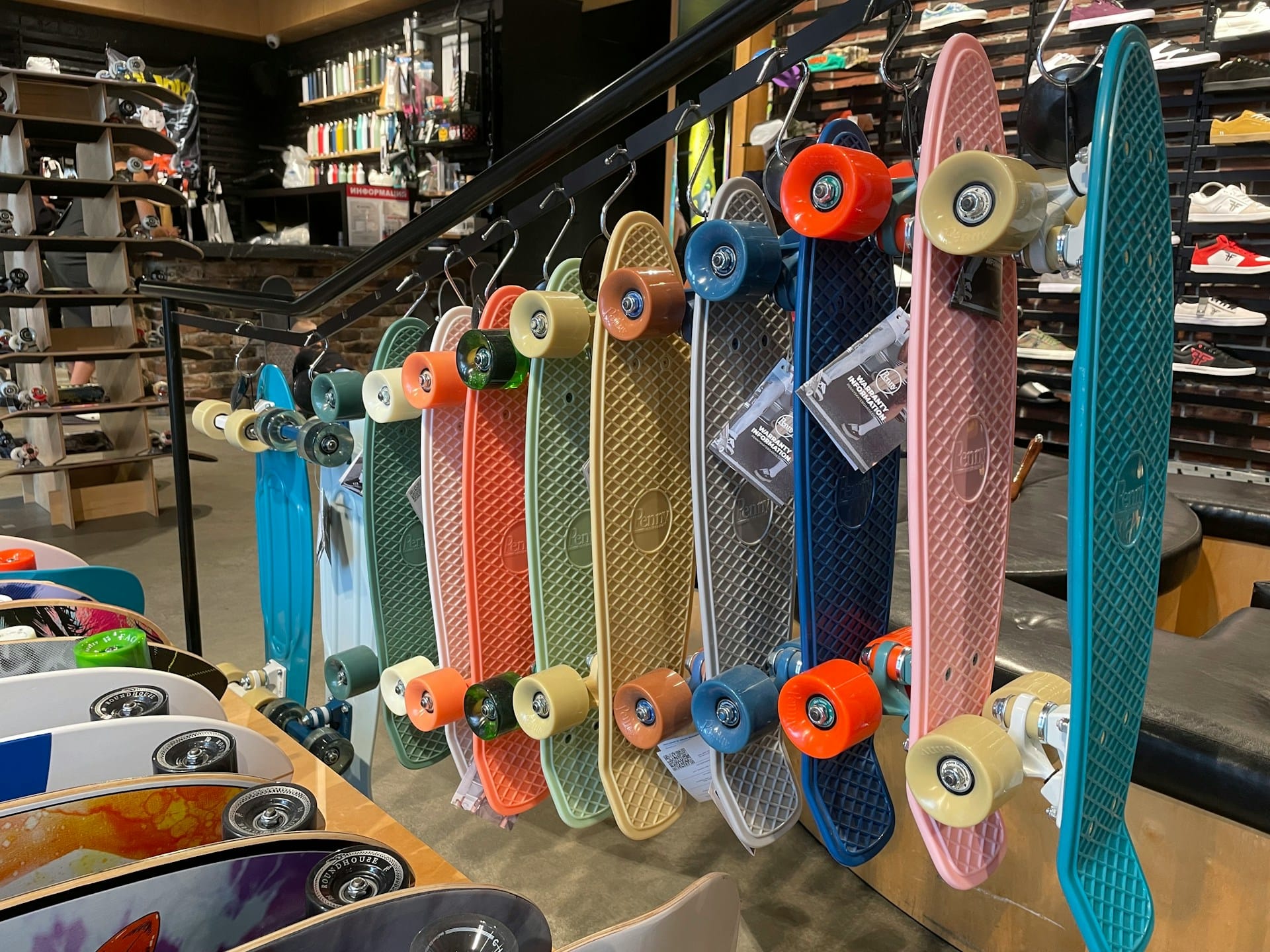
I want to make this clear: The supply chain isn't stealing from you. Shops are a place for riders to discover your product, a place to hold inventory, and a place for advice. Distributors handle logistics so you don't have to ship individual orders to dozens of shops. These services cost money, and the markup reflects that. But it does mean that roughly 50–60% of every retail dollar goes to people who aren't you.
How DTC Changes Things
Direct-to-consumer (DTC) matters a lot in niche markets. When you sell an $18 set of angled risers directly from your own website, you keep the full retail price minus your production and shipping costs. Instead of netting $1.40 on a $5 commodity riser through a shop, you might net $14 or more on an $18 precision product sold direct.
Seismic's angled truck risers are a perfect example of this. They retail around $18 for a pair of CNC-machined composite wedges with a biomimetic honeycomb structure, optimized stacking tolerances, and ultra-low profiles. That's not a commodity plastic spacer—it's an engineered product with genuine design innovation, and the price reflects it. Seismic sells direct through their site and through specialty retailers. The DTC sales carry dramatically better margins.
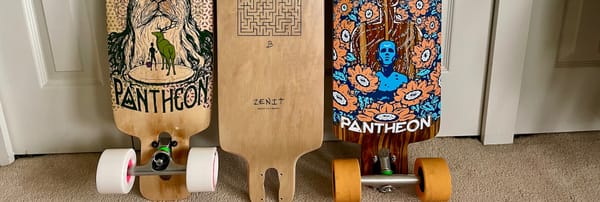
Pantheon Longboards runs a similar hybrid model. Jeff Vyain built the brand around purpose-driven commuter and distance decks, selling directly through his own site while also distributing to specialty shops. The DTC channel funds the brand's ability to keep iterating on deck designs and supporting riders. When Pantheon initially partnered with Boa Wheels to create 88 Wheel Co, they applied that same combination of manufacturing knowledge and direct community engagement to wheels—an inherently higher-cost product to develop (proprietary urethane formulas, custom cores, mold tooling) but one that commands premium pricing.
The pattern across all three companies is the same: Deep expertise in a specific product category, a direct relationship with the riding community, and a DTC channel that provides the margins needed to keep a small operation viable.
The Starter Ladder: Risers, Bearings, Hardware
If I'm serious about this—and I'm genuinely exploring whether I should be—there's a logical progression that minimizes capital risk while letting me prove the concept.
1. Start with risers. Here's why: A consumer-grade 3D printer loaded with PETG-CF (carbon-fiber-filled PETG) can produce functional angled risers and shock pads right now, today, in my garage. The material is stiff, dimensionally stable, and tough enough for the compressive loads between a truck baseplate and a deck. My tooling cost is essentially zero. There are no injection molds, no CNC setup fees, and no minimum order quantities from an overseas factory.
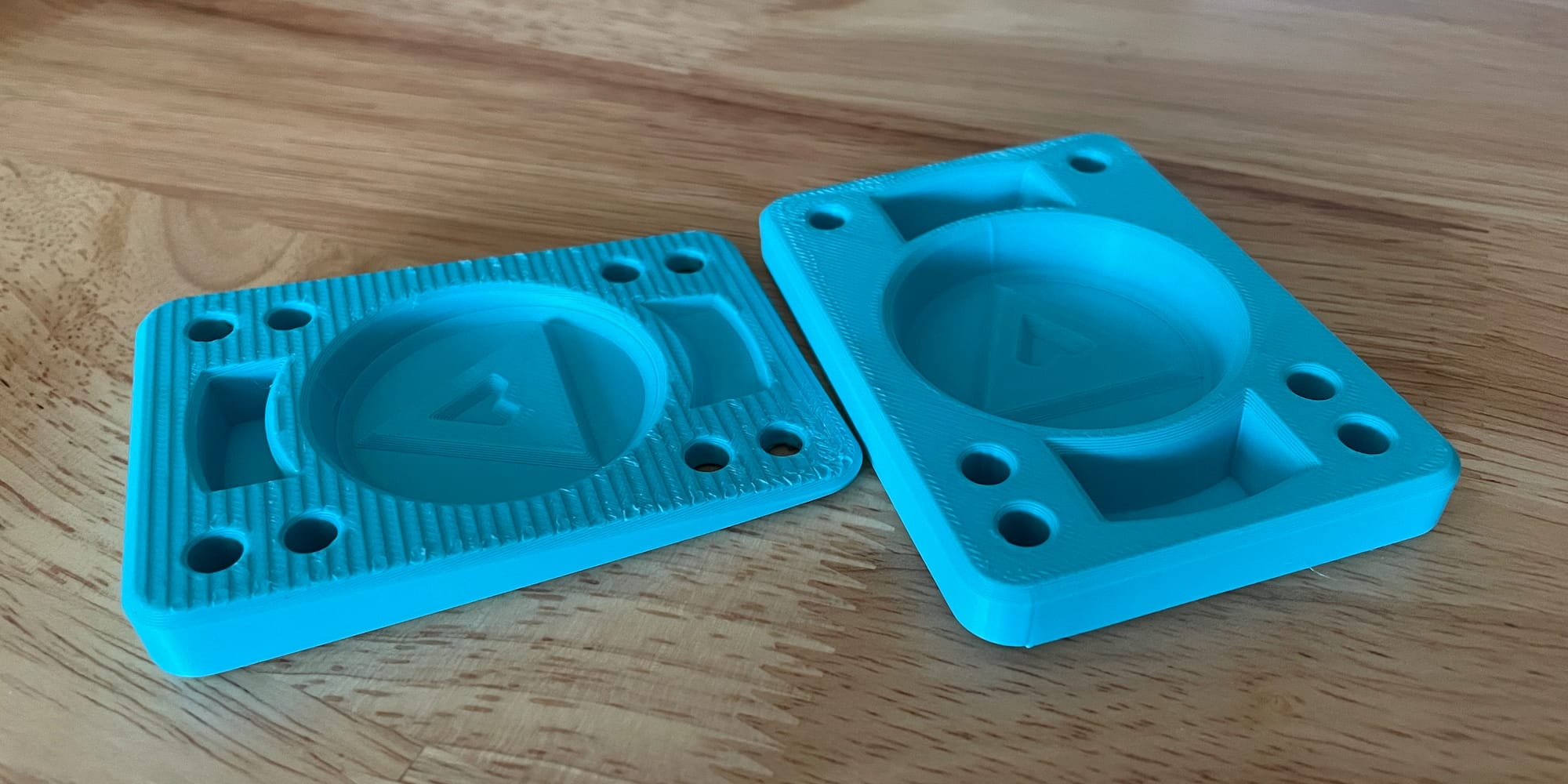
For proving a concept, testing angles, and getting product into the hands of real riders for feedback? It's an incredibly low-risk starting point. I can iterate on designs overnight. If version one has alignment issues, version two can be printing by morning.
The economics work, too. A spool of PETG-CF runs roughly $30-40 and contains enough material for dozens of riser sets. Even selling at $10 per set, which is below premium competitors but above commodity plastic, the per-unit margin on DTC sales is strong because my production cost is measured in cents of filament and a few hours of print time. (There's also design and testing time.)
2. Bearings come next. There's a reason Jeff Bezos started Amazon with books: The unit price was low, they were cheap and easy to ship, and the customer couldn't buy the wrong size, which meant near-zero returns. Bearings are the books of skateboarding. Every skateboard on earth uses the same 608-size bearing, eight per setup. There's no compatibility question, no wrong width, no angle to choose. A set of bearings from LWBSK8 would fit every board you own. They ship in a padded mailer for a few dollars. They can't break, warp, or delaminate in a warehouse. And like book buyers who keep buying books, commuters who ride daily wear through bearings and come back for more, which means recurring revenue without a subscription model.
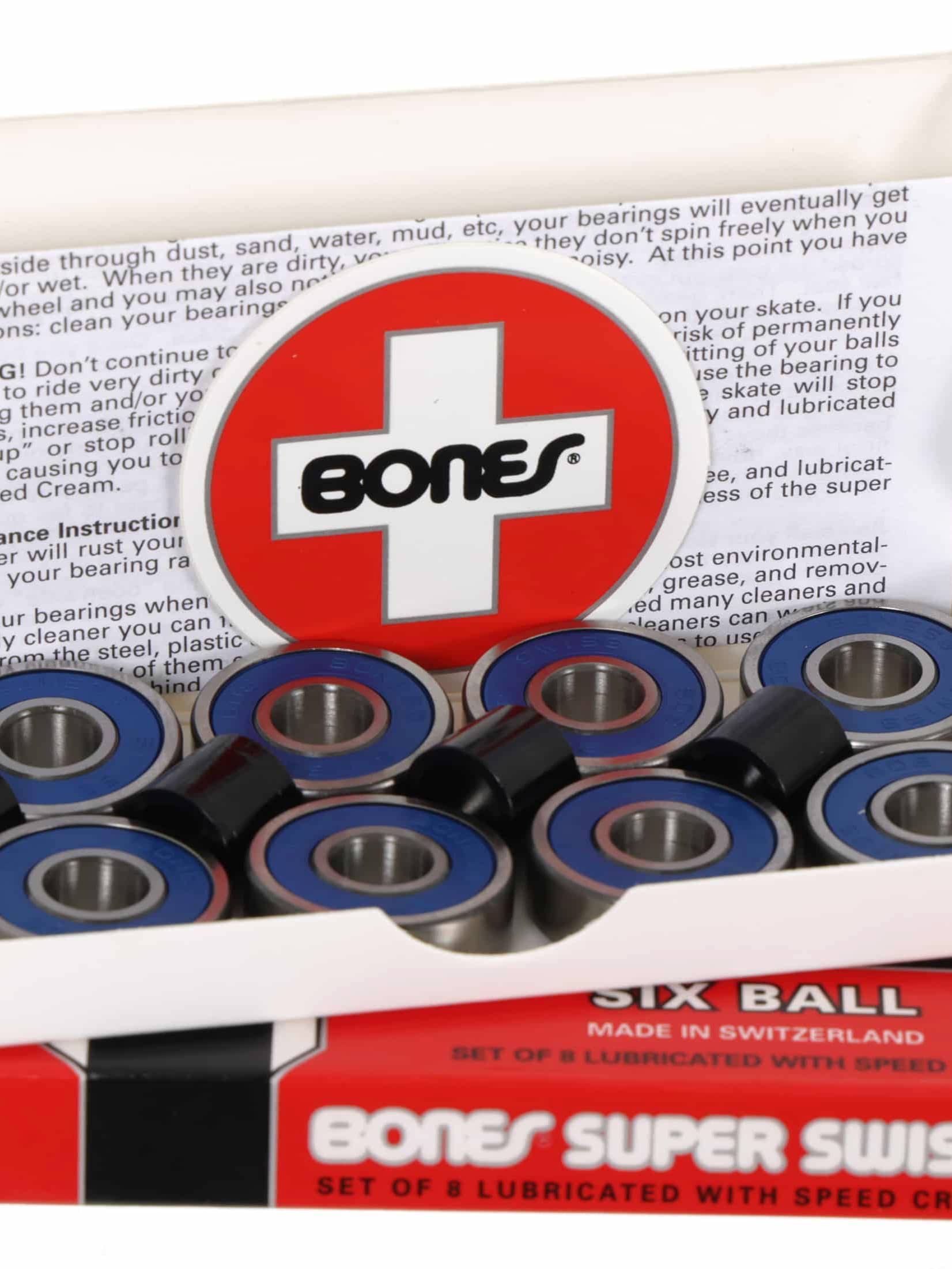
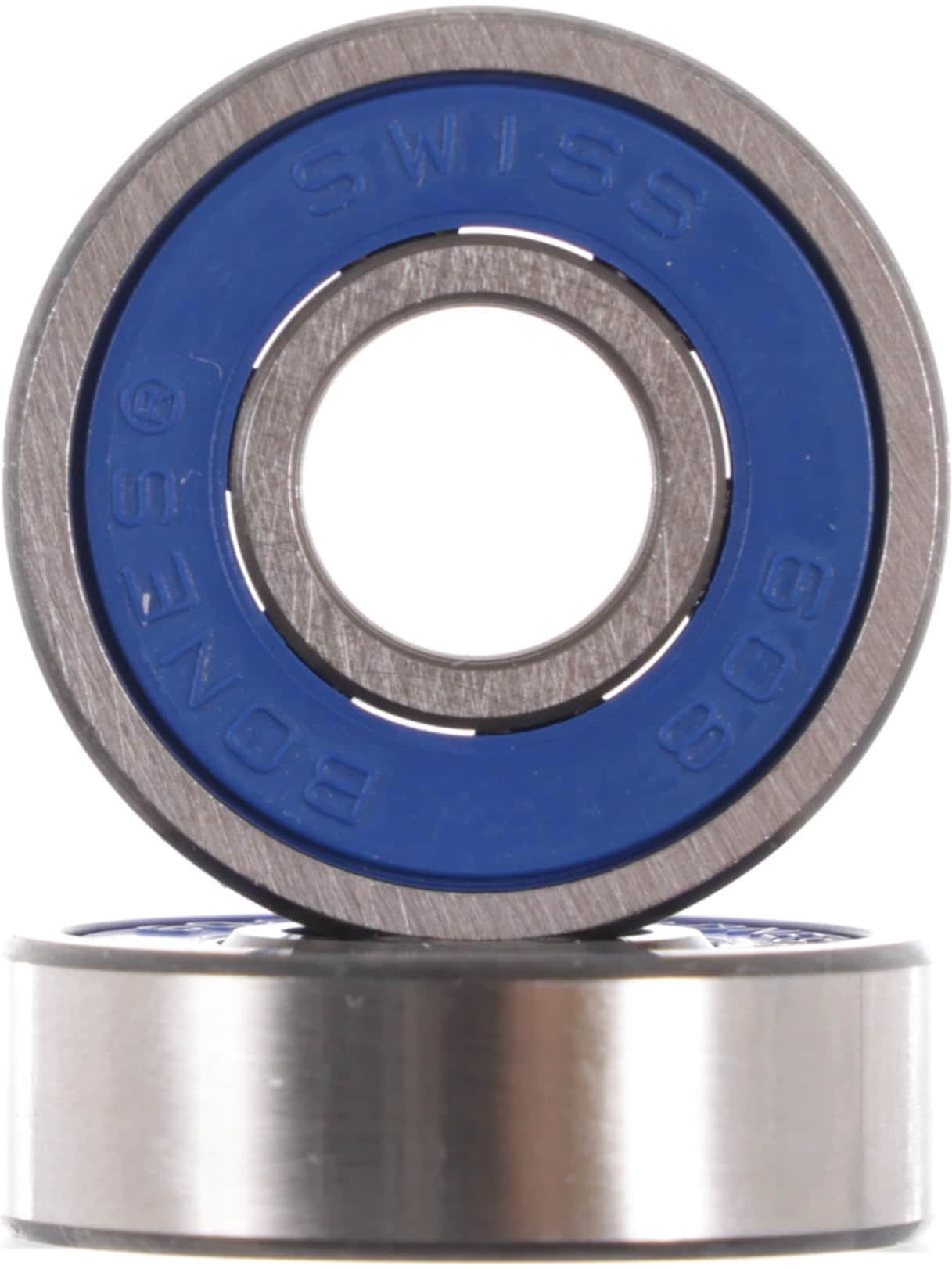
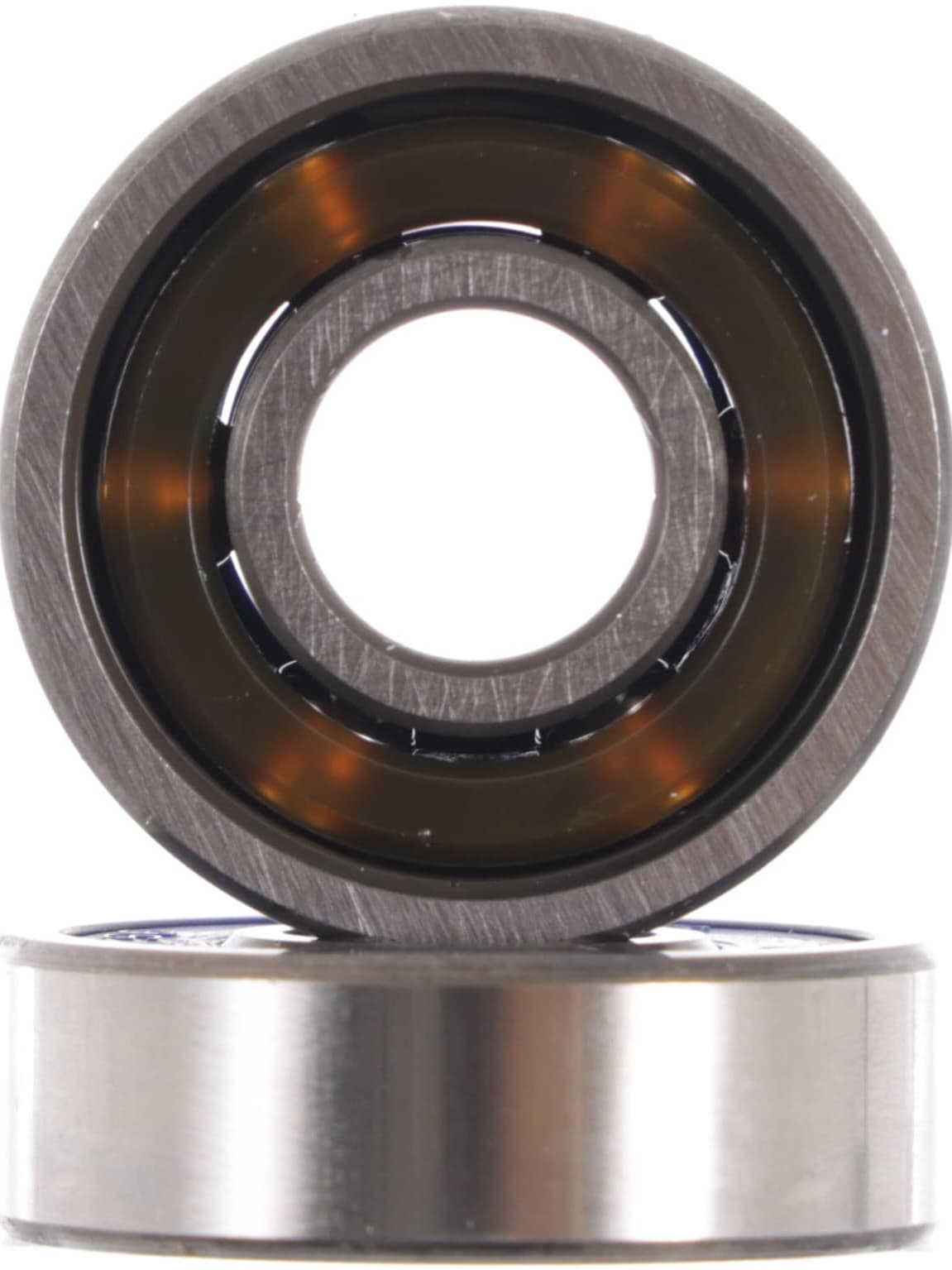
Standard 608 bearings can be sourced from manufacturers for just a few dollars per set of eight at wholesale volume. Sometimes less, depending on quantity and supplier. The retail price for branded bearings runs $15–$75, making them one of the highest-margin components in skateboarding. The challenge is that I'd almost certainly be sourcing from the same factories as everyone else, so differentiation comes from small features like built-in spacers, quality control, branding, and trust. I won't be pouring my own bearing races. But if I've already built a following through a riser line, I have a customer base to sell to.
3. Hardware is the third step. Mounting bolts and nuts are pure commodity: Production cost is pennies per set, retail is $3-5. The margin is fine in percentage terms but the absolute dollar amounts are tiny. Nonetheless, I can't be the only one who wants a wide button head that doesn't damage the deck, the perfect length, functional washers, and corrosion resistance.
Hardware makes sense as a catalog addition once I already have customers buying other things from me. It rounds out a shopping cart. Nobody's launching a brand on hardware.
What the Ladder Actually Tests
This progression isn't just about capital efficiency. Each step tests a different business skill.
Risers test whether I can design a functional product, produce it consistently, and get riders to try it. I'm learning CAD, print settings, quality control, packaging, and basic e-commerce—all on a product where a failed unit costs me $0.50 in filament rather than $500 in wasted injection-mold shots.
Bearings test whether I can manage a supply chain. I'd be sourcing from manufacturers, negotiating pricing, dealing with shipping and customs, and doing quality checks on incoming product. The margins are better but the logistics are more complex.
Hardware tests whether I can build a catalog and cross-sell. It's not exciting, but it's how real brands grow average order value without dramatically increasing customer acquisition costs.
Why I'm Telling You This
Most brands don't publish their strategic thinking before they have a product to sell—or after! I understand why. It feels vulnerable, and there's a reasonable argument that you're giving away your playbook. But in a market this small, trust is the product as much as the physical thing you're selling.

The longboard brands I respect all built their reputations on transparency and rider-first thinking. Watch a video from Jeff at Pantheon or a board explanation from Zenit.
I'm not comparing myself to them. They've earned their positions through years of work and real innovation. I am taking notes on how they earned trust, and doing my version of it: Writing honestly about what I'm learning, what I don't know yet, and where I think this might go.
The Honest Reality
None of this is a guaranteed path to anything. The specialty longboard market is small, the riders are demanding (in a good way), and the margins—even on DTC sales—need to cover all the unglamorous costs of running a business: website hosting, shipping supplies, customer service, returns, marketing, book-keeping, and the time I'd spend packing orders instead of riding.
The brands that survive in this space do so because the people behind them are riders first and businesspeople second.
The business model exists to support the riding and the community, not the other way around.
If the numbers work, I'll keep you posted. If they don't, I'll tell you that, too. Either way, the next spool of PETG-CF is on order.